
.png)
Why Truck Breakdowns on US-151 Require Heavy-Duty Towing
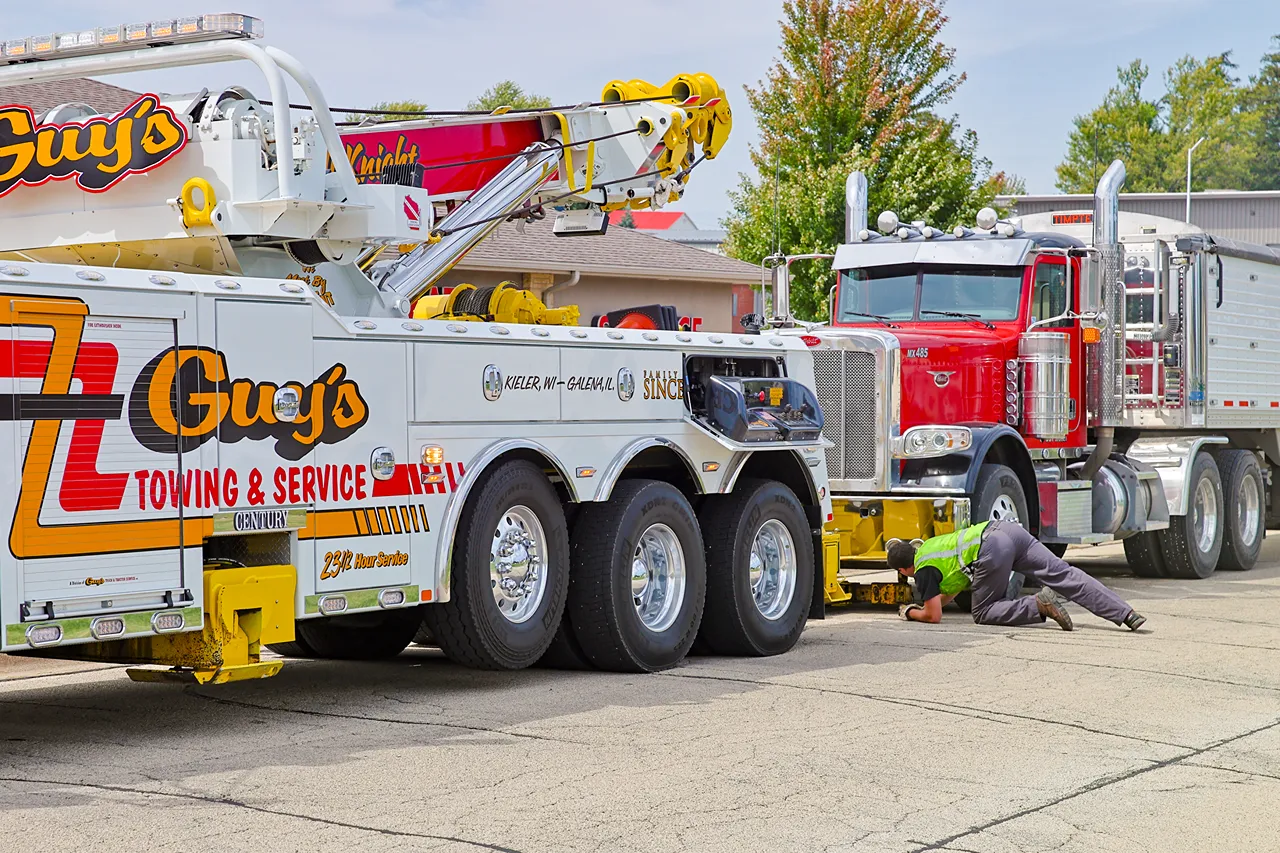
Truck breakdowns on US-151 require heavy-duty towing because commercial vehicles need specialized recovery equipment capable of safely handling their weight, size, and cargo. Whether you're hauling through Dubuque or connecting to US-20 or US-61, professional heavy-duty recovery helps protect your truck, reduce downtime, and keep traffic moving safely.
From tractor-trailers leaving the Dubuque Industrial Center West to trucks transporting materials through the Port of Dubuque, breakdowns happen in locations where quick, specialized recovery is essential.
Why US-151 Sees So Many Heavy-Duty Breakdowns
US-151 is a vital freight artery connecting eastern Iowa with Wisconsin and beyond. Every day, it carries a constant mix of semi-trucks, dump trucks, construction equipment, agricultural vehicles, and commercial fleets.
That heavy traffic naturally increases the likelihood of mechanical failures, tire blowouts, and accident-related recoveries.
Drivers frequently transition between US-20, US-61, the Northwest Arterial, John F. Kennedy Road, and Dodge Street, creating numerous merging points where stop-and-go traffic, lane changes, and varying speeds place additional stress on heavy-duty vehicles.
The result? Trucks often experience failures precisely where traffic congestion makes recovery more complicated.
Heavy-Duty Towing Is Built for Commercial Vehicles
Heavy-duty towing is specifically designed for Class 7 and Class 8 trucks, buses, motorhomes, construction equipment, and other large commercial vehicles that exceed the capabilities of conventional tow trucks.
Unlike light-duty towing, heavy-duty recovery requires equipment capable of safely lifting and transporting vehicles weighing tens of thousands of pounds.
Professional heavy-duty tow trucks commonly feature:
- Rotator wreckers
- Heavy underreach towing systems
- High-capacity winches
- Air cushion recovery equipment
- Multiple axle configurations for stability
Using the wrong recovery equipment can damage suspension components, driveline parts, steering systems, or the frame itself. That's why commercial trucks require operators trained specifically in commercial vehicle recovery.
Common Reasons Trucks Need Heavy-Duty Towing on US-151
The answer is straightforward: most roadside failures leave the truck unable to move safely under its own power.
Some of the most common causes include:
Engine Failure
When a major component fails, the engine may shut down completely to prevent catastrophic damage. Preventing further engine damage after oil pressure loss or severe overheating is one reason roadside towing is often necessary.
Transmission Problems
A failed transmission can leave a truck stuck in gear, unable to shift, or unable to move altogether.
Brake System Failures
Problems involving air compressors, air lines, service chambers, or brake components can make operating the truck unsafe until repairs are completed.
Driveline Damage
Driveshaft failures, broken differentials, damaged axle shafts, or failed wheel bearings often leave commercial trucks immobilized. Continuing to drive with these issues can cause significantly more damage to the driveline.
Tire Blowouts
A blown steer tire or multiple drive tire failures may prevent safe roadside replacement, especially when fully loaded or stopped in a dangerous location.
Collision Recovery
Even relatively minor accidents can require heavy recovery services if suspension, steering, or axle components are damaged.
Location Matters During Heavy-Duty Recovery
Where a breakdown occurs greatly affects how recovery is performed.
A truck disabled along US-151 near the Julien Dubuque Bridge presents different challenges than one stopped near Peosta, Asbury, or Key West, IA.
For example:
- Narrow shoulders require careful positioning of recovery equipment.
- Busy intersections increase risks for roadside workers.
- Hills and curves reduce driver visibility.
- High-speed traffic limits available workspace.
- Fully loaded trailers require additional stabilization.
Near industrial areas like the Industrial parks along US-20, traffic often includes oversized loads, vocational trucks, and delivery vehicles that require coordinated recovery operations to avoid disrupting nearby businesses.
Freight Traffic Around Dubuque Creates Unique Recovery Challenges
Dubuque serves as an important transportation hub.
Commercial trucks regularly travel between:
- The Port of Dubuque
- Dubuque Industrial Center West
- Manufacturing facilities
- Warehouses
- Distribution centres
- Construction projects
- Agricultural operations
Many routes connect through US-20, US-61, and US-151, creating heavy commercial traffic throughout the day.
Drivers heading toward East Dubuque, IL, Sageville, Peosta, or the Dubuque Regional Airport frequently use these corridors, meaning a disabled truck can quickly affect surrounding traffic.
Even familiar landmarks like Eagle Point Park can help drivers communicate their location during an emergency, allowing dispatchers to send the appropriate recovery equipment faster.
Why Specialized Equipment Makes a Difference
The answer is simple: commercial trucks cannot be recovered safely with standard tow trucks.
Heavy-duty wreckers are designed to distribute weight correctly while protecting the truck's frame, suspension, steering, and drivetrain during transport.
Depending on the situation, operators may use:
- Heavy-duty towing
- Truck recovery
- Winch-out services
- Accident recovery
- Trailer recovery
- Load shifts
- Commercial vehicle recovery
- Rotator services
Choosing the proper recovery method helps prevent additional mechanical damage while reducing overall downtime.
Safety Always Comes First
When a truck breaks down along US-151, driver safety becomes the top priority.
Commercial vehicles often stop close to high-speed traffic, leaving little room for roadside repairs.
Professional recovery operators establish safe work zones before beginning any towing operation. This may include traffic control, vehicle stabilization, hazard assessments, and specialized recovery techniques depending on the truck's condition.
Attempting to tow a disabled commercial truck using inadequate equipment creates unnecessary risks for everyone involved.
Preventive Maintenance Helps Reduce Roadside Breakdowns
While not every breakdown can be prevented, routine preventive maintenance significantly lowers the risk of unexpected roadside failures.
Regular inspections should include:
- Brake system inspections
- Engine oil changes
- Cooling system maintenance
- Transmission service
- Wheel bearing inspections
- Air system checks
- Suspension inspections
- Tire condition monitoring
Preventive maintenance helps identify worn components before they become expensive roadside emergencies, reducing both repair costs and unexpected downtime.
Final Thoughts
Truck breakdowns along US-151 require more than an ordinary tow truck. From major engine failures and transmission problems to accident recovery and driveline damage, commercial vehicles demand specialized heavy-duty towing equipment and experienced operators who understand how to recover large trucks safely.
With freight constantly moving between US-20, US-61, Dubuque Industrial Center West, the Port of Dubuque, East Dubuque, IL, Peosta, Asbury, and surrounding communities, quick professional recovery helps keep drivers safe, minimizes downtime, and gets freight moving again.
If your truck experiences a breakdown anywhere around Dubuque, working with an experienced heavy-duty towing provider ensures your equipment is recovered safely, efficiently, and with the specialized care commercial vehicles require.
Frequently Asked Questions
Why can't a regular tow truck tow a semi-truck?
Standard tow trucks aren't built to safely lift or transport heavy commercial vehicles. Heavy-duty towing uses specialized wreckers, underreach systems, and high-capacity recovery equipment designed specifically for Class 7 and Class 8 trucks.
What are the most common reasons trucks need heavy-duty towing?
Engine failures, transmission problems, brake system issues, driveline damage, tire blowouts, accidents, and overheating are among the most common reasons commercial trucks require heavy-duty recovery services.
How quickly should a disabled truck be removed from US-151?
As soon as it can be done safely. Prompt heavy-duty towing reduces safety hazards for motorists, helps restore traffic flow, and minimizes downtime for trucking companies operating throughout the Dubuque area.
Does heavy-duty towing prevent additional truck damage?
Yes. Professional heavy-duty recovery operators use specialized equipment and proper lifting techniques that help protect the frame, suspension, driveline, steering components, and trailer during transport.